Free shipping  ·  90-day money-back guarantee
1 / 8 Lumbean Back Decompression Massager
4.7/5 from 2,184 customers
Lumbean — Back Decompression Massager
$249.95 $109.99 Save 56%

Two weeks between appointments. Three hours of relief.

The treatment isn’t the problem. The gap after it is, and that’s the only thing this fixes.

Sit eight hours a day? Then this is about your week, not your age.

  • Opens the space between your vertebrae. So does a good stretch.
  • Holds it open with heat. A stretch can’t.
  • Drives circulation in while it’s open. Nothing else does.
  • 15 minutes, lying flat. Floor or bed.
Step 1: pick your bundle
Add to cart$169.99
90-day money-back guarantee Free shipping
Dan R.

“I’ve had a chiro on retainer for six years. He’s good. But I’d be fine Monday and hurting again by Thursday, and my next slot was always ten days out. This is the first thing I’ve used that covers the gap. Fifteen minutes after work, every day. I’m not cancelling the chiro. I just don’t dread the wait anymore.”

90-day guarantee

90-day money-back guarantee

If it doesn’t do what we say, tell us any time in 90 days and we refund every cent. No hassle.

Free shipping

Free shipping

Free shipping on every order, wherever we ship.

USB-C rechargeable

Built to last

USB-C rechargeable. No disposable batteries, no cords to replace.


Fifteen minutes a day, against eight hours of sitting.

Here’s why that’s finally enough.

Sitting does two things to your back. Everything you’ve tried only addresses one.

Every hour you spend sitting puts load through your lower back that doesn’t fully release when you stand up. A little of it stays. Then you sit again tomorrow, and the day after, and the week after that.

Call it what it is: a debt. Eight hours a day, five days a week, accumulating.

Now look at what you’ve been paying it down with. One appointment every two weeks. Fifteen minutes on a table, once a fortnight, against forty hours of sitting in the same period.

That math was never going to work. But it’s worse than just infrequent, because the payment you’re making doesn’t clear what it should.

Panel 1: sitting closes the space between the vertebrae. Panel 2: and restricts the blood supply to the surrounding tissue.

Here’s the part nobody explains.

Sitting doesn’t only close the space between your vertebrae. It also restricts blood supply to the tissue around them. Two things, not one.

So when something reopens that space, whether it’s a stretch, a hang on a pull-up bar, an inversion table or an adjustment, the space opens. It genuinely does. But tissue that isn’t being supplied can’t hold it. Within an hour, it’s closed again.

That’s not you failing to keep up with your exercises. That’s a structural reason. You were only ever getting half the job done, at a fraction of the frequency you needed.

That’s why decompression is only step one.

Step one does work. It’s been tested.

In 2012, a research team at the Regional Neurosciences Centre in Newcastle upon Tyne ran a controlled trial on patients with single-level lumbar disc disease, all of whom had been referred for surgery. One group was given traction. The other wasn’t.

In the traction group, 10 of 13 avoided surgery. In the control group, 2 of 9.

Prasad, Gregson & Mendelow, Disability & Rehabilitation, 2012.

So opening the space is not a gimmick. It’s one of the oldest ideas in medicine, and one of the few still standing. The trouble has never been whether it works. It’s how long it lasts once you stand up.

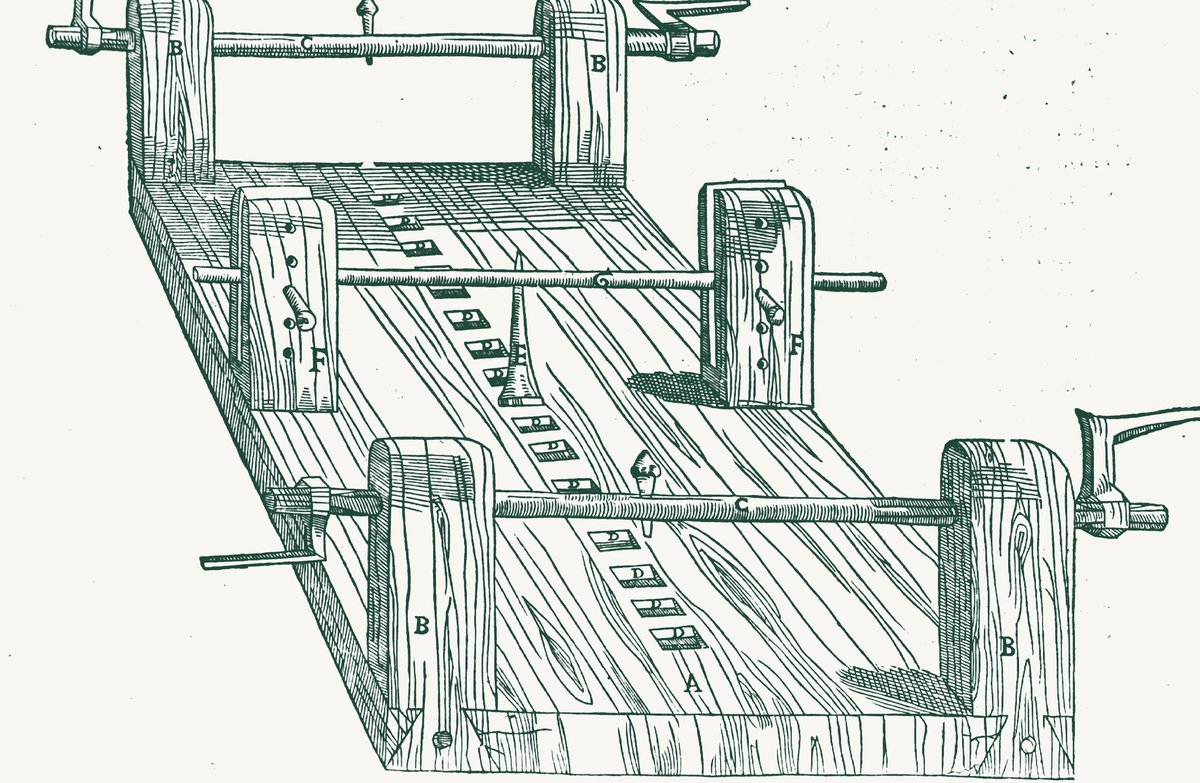
A 1544 woodcut of the scamnum, the Hippocratic traction bench: a long wooden table with winches at each end.
The scamnum, from Guido Guidi’s Chirurgia, 1544. Image: U.S. National Library of Medicine.

Around 400 BC, Hippocrates built three devices for exactly this: the ladder, the board, and the bench he called the scamnum. All of them did one thing, which was to pull the spine along its length and open the space between the vertebrae. Twenty-four centuries later, it’s still the principle behind every traction table in every clinic in the country.

The idea was never the problem. Getting it done daily was.

Space, then supply. In that order, every day.

Lumbean runs one automated cycle. Three phases, in sequence, because the order is what makes it work.

A man lying flat on a living room rug with the Lumbean positioned under his lower back.
Step one

Traction

An internal airbag lifts and separates your lower back, opening the space between the vertebrae. This is the step a stretch or an inversion table also does.

On its own, it closes again within the hour.
Step two

Heat

Therapeutic warmth keeps the surrounding tissue pliable so the space you just created stays open instead of snapping shut.

On its own, heat has no space to hold. It’s a hot towel.
Step three

Vibration

Dual motors drive circulation into the space while it’s open, into the tissue that sitting has been under-supplying all day.

On its own, circulation to a closed space changes nothing.

A sequence, not a bundle. Each phase is useless without the other two, which is exactly why the massage gun, the heating pad and the foam roller in your drawer were never going to do this between them. They were never a waste of money. They were each one third of the job, performed in the wrong order, on a back that needed all three at once.

Fifteen minutes. Lying on your floor or your bed. While you’d be on the couch anyway.

This is the whole routine.

Press the button once and lie back. The cycle runs itself while you do nothing at all.

No settings, no positions to hold, nothing to remember. Fifteen minutes on the floor at the end of the day.

What fourteen days of waiting actually costs.

Dr. Christian Cruz, DPT

"What I appreciate about Lumbean is that it combines traction, heat, and vibration, three things that each have real clinical value, into one device someone can actually use at home every day. The patients I see who make the most consistent progress are the ones doing something daily between visits, not just twice a month on a table. Fifteen minutes a day adds up fast."

Your chiropractor isn’t the problem here. Neither is your physio.

They can see you once a fortnight. You sit for forty hours in between. Nobody is being seen daily for a back that’s being re-compressed daily, because the caps don’t allow it and neither does the calendar.

That’s the gap. Not a failure of your treatment, but a limit on how often anyone can deliver it. The fortnight between appointments is the part nobody has ever offered you a way to cover.

Lumbean is a one-time $109.99, which is less than two visits. And it’s the only thing you own that runs the full sequence, every day, for as long as you keep sitting.

What consistent use tends to look like

  1. Days 1–3

    Most people notice the session itself feels good, and the stiffness after sitting takes longer to build.

  2. Week 1

    The window of relief after each session starts lasting into the evening rather than the hour.

  3. Weeks 2–3

    Where most customers say they noticed it in ordinary things: getting out of the car, standing up after a long call, the first hour of the morning.

  4. Week 4 and on

    Daily use becomes the thing that keeps the debt from accumulating in the first place.

Individual results vary. Lumbean is a wellness device and is not a registered therapeutic device.

Three steps: the device charging by USB-C, being positioned on the rug, and someone lying back on it.

Three steps. Then you lie down.

One

Charge it

USB-C, like your phone. No disposable batteries, no proprietary cable to lose.

Two

Position it

Lay it on the floor or your bed and lie back so it sits under your lower back.

Three

Press once

One press starts the full traction, heat and vibration cycle. Nothing to adjust. You lie there for 15 minutes, then switch it off.

It’s fifteen minutes lying down at the end of the day. That’s the entire ask, which is the reason it doesn’t end up in the drawer with the foam roller.

Everything opens the space. Almost nothing keeps it.

 Opens the spaceKeeps it open & supplied
Stretching or hangingYesNo
Inversion tableYesNo
Heating padNoPartly
Massage gunNoPartly
Chiropractic adjustmentYesNo, and the next one is two weeks away
PainkillersNoNo
LumbeanYesYes

Look down the first column. Plenty of things open the space. That part isn’t hard, and it’s why most of them feel good for an hour.

Now look at the second. That’s the column that decides whether you’re still comfortable at bedtime.

You could approximate this. Hang from a bar, then lie on a heating pad, then use a massage gun, in that order, every single day for the next six months.

The reason nobody does is the reason this exists.

What people say after a month

Mark T. holding the Lumbean on his sofa, his old heating pad folded beside him.

“I already had a heating pad. This isn’t that.”

“Bought a heating pad two winters ago and it’s still the best ten dollars I ever spent, for about forty minutes. This is a different thing entirely. You can feel the lift working before the heat even kicks in. I use both now, honestly. Just not for the same thing.”

Karen M. sitting on the floor with the Lumbean, a foam roller and massage gun case behind her.

“I’ve bought things like this before.”

“Massage gun, foam roller, one of those TENS pads off Amazon. All in a drawer in the spare room. I bought this expecting to add to the collection. Four weeks in and it’s the only one still out on the floor where I can see it, which tells you everything.”

John D. in his home office, carrying the Lumbean past his desk.

“My insurance covers physio. I still bought this.”

“Ten dollar copay, twenty visits a year. Sounds great until you do the math. That’s one visit every two and a half weeks, and I sit for forty hours in between. My physio actually said the thing I needed was something daily. This is the daily part.”

Swipe for more

Everything that comes with it

Most people buying two are buying the second for a partner or a parent. That one saves you the most.

1 Lumbean Back Decompression Massager

$109.99
$249.95 One Lumbean Back Decompression Massager with its USB-C cable.
  • One Back Decompression Massager
  • 90-day money-back guarantee
  • Free shipping
Get my Lumbean
Best value

2 Lumbean Back Decompression Massagers

$169.99
$499.90 Two Lumbean Back Decompression Massagers, each with its own USB-C cable.
  • Two Back Decompression Massagers
  • The deeper discount: $85 a unit instead of $109.99
  • 90-day money-back guarantee, on both
Get my Lumbeans
90-day money-back guarantee

Use it for 90 days. Then decide.

We’re not asking you to trust a claim. We’re asking you to run the sequence daily for three months and see what your back does.

If it doesn’t deliver what we’ve described on this page, if the relief doesn’t outlast what you’re used to, or you’re simply not convinced, tell us any time within 90 days and we’ll refund every cent. No return interrogation. No restocking fee.

You’re the one who’s been burned by this category before. So the risk sits with us, not you. Email us any day of the week — we're here.

Questions people ask first

Is this safe if I have a herniated disc, osteoporosis, or I’ve had spinal surgery?

Lumbean applies gentle traction and is designed for general back discomfort, not for treating diagnosed conditions. If you have a diagnosed spinal condition, have had surgery on your spine, have osteoporosis, or you’re pregnant, talk to your doctor before using it. We’d rather you ask first.

Isn’t this just an inversion table on the floor?

An inversion table does step one. It opens the space, which is real and worth doing. What it doesn’t do is keep that space open or drive supply into it, which is why the relief tends not to survive the rest of the day. Lumbean runs all three phases in sequence.

I already have a heating pad. Why is this different?

A heating pad does part of step two. Warmth is genuinely useful, but heat applied to a compressed back has no space to hold open. The traction has to come first for the heat to do anything structural.

How long before I notice anything?

Most people feel the session itself immediately. The change people tend to report, relief lasting into the evening rather than the hour, usually shows up somewhere in the second or third week of daily use. Individual results vary.

How long is a session?

15 minutes, automated. One button.

Do I need batteries?

No. USB-C rechargeable.

What are the dimensions and weight limit?

59cm × 25cm × 8cm (23.22in × 9.05in × 3.14in). Ships in a compact box. Fits under most beds or on a shelf.

What’s your return policy?

90 days, full refund, no restocking fee.

Get my Lumbean
90-day money-back guaranteeFree shipping